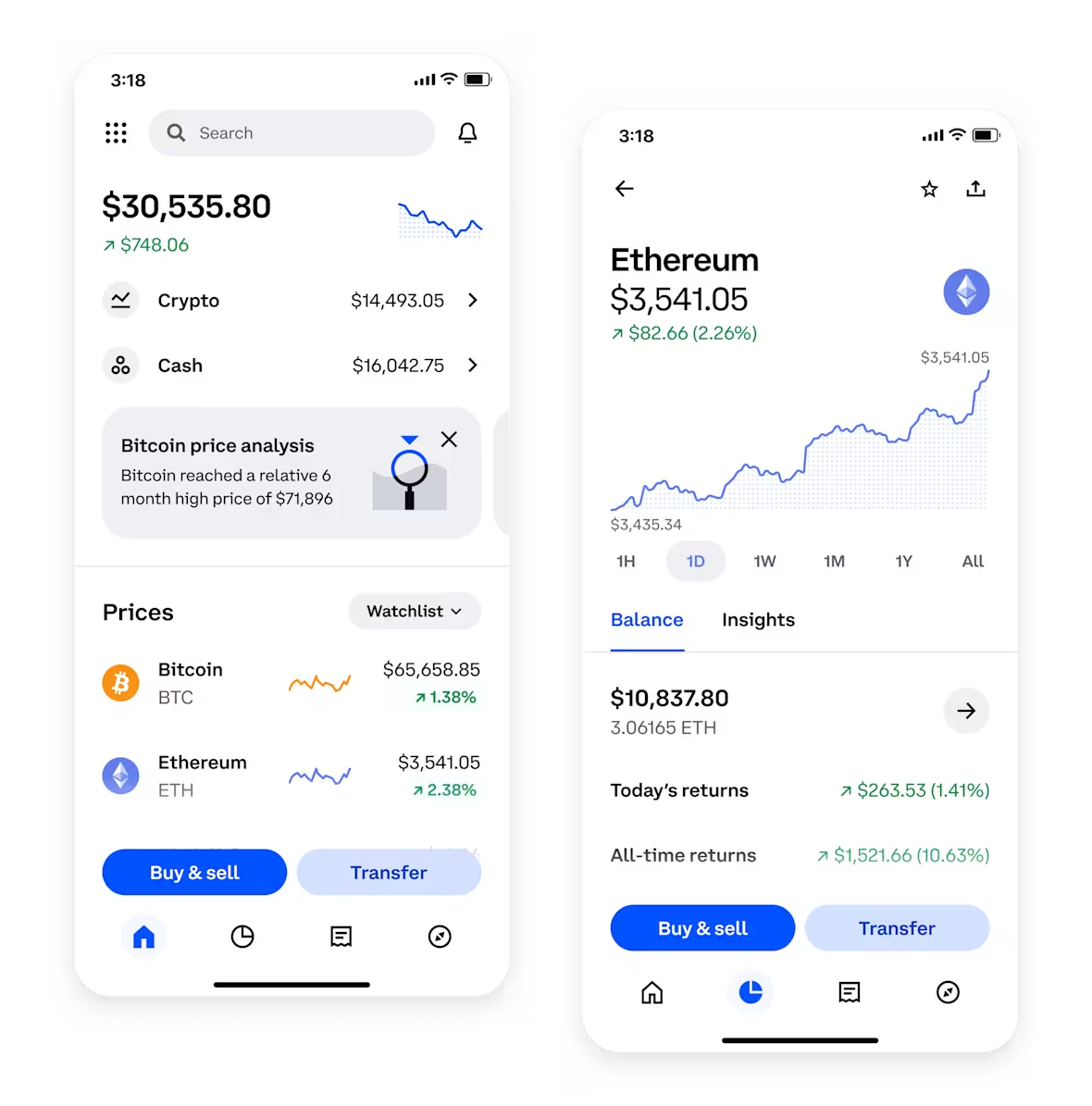

In the rapidly evolving world of cryptocurrency, USD Coin (USDC) has emerged as a leading stablecoin, prized for its stability and utility. A common question among holders is: who to exchange USDC with? The answer depends on your specific needs, whether for trading, cashing out, or using in decentralized finance (DeFi). This guide explores the top platforms and key considerations for exchanging your USDC securely and efficiently.
Centralized exchanges (CEXs) like Coinbase, Binance, and Kraken are often the first stop for many users. These platforms offer a familiar, user-friendly interface for converting USDC to other cryptocurrencies like Bitcoin or Ethereum, or directly to fiat currencies such as US Dollars or Euros. They provide high liquidity, robust security measures (though you cede some control of your assets), and integrated wallets. For beginners or those looking for a straightforward swap, these established CEXs are a reliable choice.
For users prioritizing control and privacy, decentralized exchanges (DEXs) are the go-to solution. Platforms like Uniswap, PancakeSwap, and Curve operate on blockchain networks, allowing you to exchange USDC for a vast array of other tokens directly from your personal wallet like MetaMask. This method eliminates the need for an intermediary, keeping you in full custody of your funds. DEXs are particularly powerful for accessing new tokens and engaging in DeFi activities like yield farming, where you can exchange and provide liquidity with your USDC.
Beyond traditional exchanges, peer-to-peer (P2P) marketplaces and dedicated crypto swap services offer alternative avenues. P2P platforms connect buyers and sellers directly, often facilitating transactions with various payment methods. Meanwhile, instant swap services like ChangeNOW or SimpleSwap provide a fast, no-registration-required option to exchange USDC for other assets across different blockchains. These are ideal for quick, one-off transactions without going through a full exchange onboarding process.
Before making any exchange, critical factors must be evaluated. Always compare fees, which can include network gas fees, platform transaction fees, and spread costs. Check the supported networks (Ethereum, Solana, Polygon, etc.) to ensure compatibility with your USDC. Security is paramount; verify the reputation of the platform, enable two-factor authentication, and consider using a hardware wallet for significant sums. Finally, assess the liquidity and exchange rates to ensure you get a fair deal without substantial price slippage.
Ultimately, deciding who to exchange USDC with is not a one-size-fits-all decision. For convenience and fiat off-ramps, centralized exchanges excel. For autonomy and access to the broader DeFi ecosystem, decentralized platforms are unmatched. By understanding the landscape and prioritizing your needs for security, cost, and convenience, you can confidently choose the best partner for your USDC transactions in 2024 and beyond.